Islamic Architecture
Pick three structures in Isfahan from different time periods and describe them in a complete paragraph. In addition to general details, be sure in this paragraph to explain their architectural and societal functions (what purpose did they serve), how they fit into their historical period, and what drew you to these particular buildings.
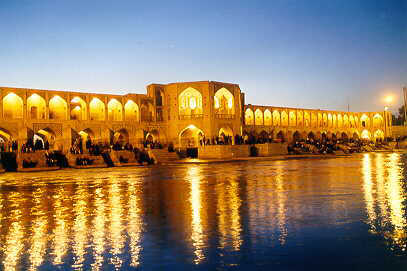
There are so many beautiful examples; it was really hard to choose just three and to have them reflect different time periods. I decided to choose one structure from each section. The first section I chose was Palaces and Bridges. There is no way you cannot be impressed by the Si-o-she Pol, the most famous of Isfahan’s bridges. The bridge which gets its name from the Farsi for 33 is made up of a series of 33 arches. It even has a famous tea house. Further research and photographs reveal many more beautiful elements of the architectural beauty. The bridge was a major traffic path, crossing the Zayandeh River. The center lane was created wide enough to be used by animal-drawn carts as well as large military convoys. The side passage ways allowed for pedestrian traffic
The bridge was originally known as the Bridge of Allahverdi Khan the general responsible for building it.
The bridge was commissioned in 1602 by Shah (King) Abbas I, shortly after he moved the capital city to Isfahan.
The next structure comes from the section Mosques and Shrines, I notice a simple Mosque with no ornate designs. The Mosque at Kabutar stands in a small cemetery to the south of the village surrounded by fertile it stands alone. But don’t let the exterior fool you. The interior has excellent examples of Seljuk brickwork, brickwork that was decorated to take full advantage of Iran’s strong sunlight and create wonderful light and shadow designs in the interior. The simple design lets you see the exterior and interior design more clearly. The intricate design inside is as beautiful as it is simple. Though it may not be grand in size, it has the same complex design pattern of larger mosques. You can clearly see the chamber arches, as the reach to the dome. The information states that it probably dates from the 11th or 12th century.
Again in a complete paragraph write about how the architecture of Salt Lake City compares to Isfahan. Include what is similar and what is different about the buildings of the two cities. Are there structures in Salt Lake City that would provide insight into American culture and tradition (not just Utah culture)? {That is: what would a foreigner looking at our buildings on a website be able to understand about Americans from their buildings. Think a bit more than usual about these questions. I want you to act like archaeologists or anthropologists and try to think about what our buildings tell about ourselves}[If you are outside of Utah, you may use another large U.S. city near your location.
Like Salt Lake City sits at the foothills of the Wasatch Mountains, Isfahan sits at the foothills of the Zagros Mountains. Isfahan is located on the main route crisscross Iran, Salt Lake City, known as the gateway to the west, is also located on a main route that crosses the country. Both cities welcome travelers and are well known for their hospitality and friendliness.
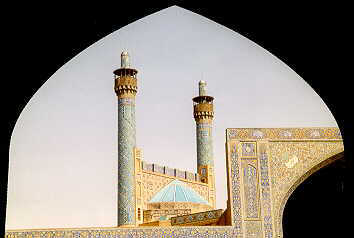
The first thing that each of cities share is that they were or are large religious center’s for a religious faith. Like Isfahan, Salt Lake City has many building that represent that religious faith. Many Temples that are built in the Salt lake Valley are similar to the many mosques that are in Isfahan. Isfahan has it Naqsh-e Jahan Square, Shah or Imam Square one of the largest squares in the world with its beautiful gardens the square features the Royal Mosque. It is the centerpiece of the city, and an outstanding example of Iranian and Islamic architecture. The Salt Lake Temple has also grown to be one of the largest Squares in the West; it too is an outstanding example of American craftsmanship is set in a beautiful square and also the centerpiece of the city.
Not wanting to choose the obvious buildings (at least not right away) I did some research. I found two wonderful online resources. Salt Lake Architecture a wonderful blog that covers old and new architecture. The other resource was The Utah Heritage Foundation. Both resources gave wonderful information about the amazing architect that is all around the Salt Lake Valley. Like the city of Isfahan, Salt Lake City wanted to build the beautiful structures using the best quality of materials, taken advantage of the excellent craftsmanship that was available. I found another similarity; many of the structure and mosques were built during and very prosperous dynasty, with the King wanting to create the most beautiful city in the world. I believe that Salt Lake City has a similar history. During the early days of the young city it was becoming a wealthy city due to the Mining Industry, with this new influx of money the city and its residents wanted to create a beautiful city in the west. And they were able to spare no expense is getting the best people to design and build some of Salt Lake's most beautiful buildings.
Many building are built in what is referred to as the South Temple Historic District The building in the district area mostly large home structure, but the district is also home to The Cathedral of the Madeleine, Utah’s first Catholic church. The church was built between 1899 and 1909 design by Architect Carl M Neuhausen as a Romanesque-style building. With this amazing massive structure with its stone carvings, it tower gargoyles it is a very impression structure.
Staying on the South Temple Historic District there is the First Presbyterian Church, constructed between 1903 and 1906. Architect Walter E. Ware modeled the designed for the church after the medieval Cathedral in Carlisle England. The churches three glass windows are one of several signature features
As mentioned above Salt Lake City’s centerpiece is Temple Square, The temple itself is an amazing testament of the workmanship of the many hands that help create this beautiful edifice. Construction started in 1853 and was not completed until 1893. Architect Truman O. Angell said that it feature both Gothic Ronamneques elements From the granite transported by oxen from the nearby canyon to the symbols that are engraved on the exterior, this was a labor of love. That same attention to detail, design and labor can also be seen in the workmanship that is used in the beautiful mosques in Isfahan. What I noticed about both cities and their architect, which is true for most architecture, that true architecture has qualities, and a characteristic all its own. That buildings and structures communicate. They communicate who were are as a people, what we believe and what we love.
